Before Star Atlases, People Used the Sky to Mark the Year
Seasonal sky markers made recurring changes easier to recognize. Learn how place and viewing conditions shaped those cues and how to read historical claims carefully.
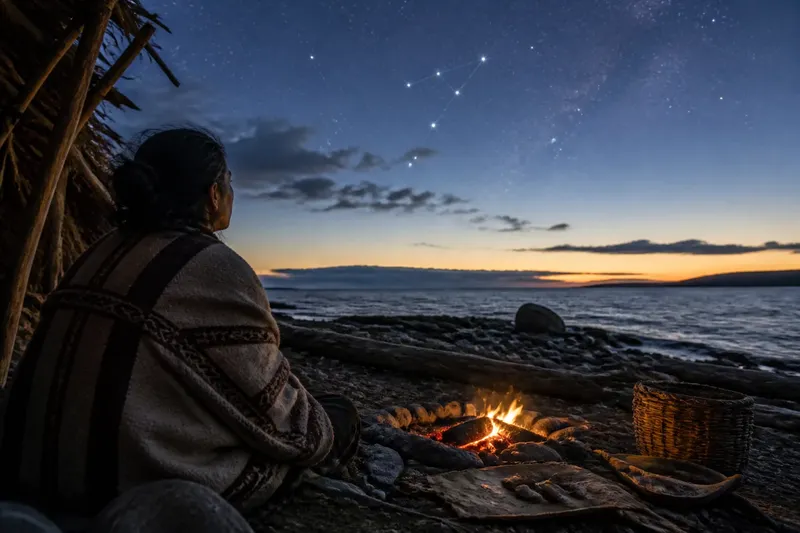
The common mistake in reading old seasonal sky knowledge is to treat one constellation as a universal calendar symbol. That shortcut can erase the practical details: where observers lived, which direction they watched, and what other signs they considered. Seasonal sky markers are best understood as local observations, not as a single calendar shared by everyone.
A recurring star pattern could help someone recognize a point in the year, but its appearance depended on the observer’s location, the horizon, and the time of night. The pattern worked more like a familiar gatepost on a route than a calendar page: useful when read alongside the path and conditions around it.
Seasonal sky markers
A seasonal marker is a sign people use to recognize a recurring part of the year. It might be a familiar group of stars appearing before dawn, a pattern setting after sunset, or a change in a constellation’s position at a customary hour. The cue did not need to divide the year into equal blocks. It needed to be recognizable and useful within a community’s routine.
To avoid unsupported generalizations, keep historical claims tied to the source at hand. Look for a named community, region, observation, and context rather than relying on a broad statement that “people everywhere” used the same stars. If an account does not identify these details, describe its claim as general or uncertain instead of filling the gaps with assumptions.
Sky cues could sit alongside observations of winds, rainfall, plants, animals, river levels, or soil. These signs are not interchangeable. A celestial pattern can recur while local conditions delay a task; a community may have considered several cues rather than treating one sky event as a fixed instruction.
Place shapes observation
A star pattern’s visibility depends on where the observer stands. A pattern may rise at a useful time in one region but remain low, obscured, or difficult to see in another. Mountains, trees, buildings, and coastal haze can block the horizon where an observer expects to find it.
The hour matters too. A pattern visible before sunrise may be hidden by daylight later in the morning, while someone watching only after dinner could miss the same change. Any claim about a “first appearance” needs context: location, direction, time, and viewing conditions.
Names and stories add another layer. Communities may organize the same bright stars into different figures or include them in larger imagined shapes. Modern constellation boundaries are useful conventions for mapping the sky, but they should not be mistaken for the only historical way people grouped or explained stars.
Reading claims carefully
One figure seems to represent everyone. A modern chart may present one set of names and outlines as if it were universal. Separate the visible stars from the lines drawn between them, then identify the naming tradition or map being used.
A cue sounds like an exact date. A simplified retelling may remove the conditions and local routines around an observation. Ask whether the cue marks a recurring period, a change in visibility, or a task undertaken when several signs align. Treat it as part of a local calendar of observations, not a date printed in the sky.
The cue seems to conflict with local weather. A celestial recurrence and variable conditions on the ground are different kinds of observation. A sky marker can orient someone to the annual cycle without predicting the weather or conditions in a field, shore, or pasture.
A story is treated as proof of practical use. A memorable narrative does not automatically describe a work schedule or seasonal instruction. Keep cultural meaning separate from a proposed practical role unless the source makes that connection clearly.
Questions about seasonal markers?
Did every society use the same stars?
No. Visibility depends on location, and traditions differ in how they group, name, and interpret stars. Avoid turning a claim about one community into a shared global list of seasonal constellations.
How could a sky pattern mark a season?
Observers could notice that a familiar pattern appeared at a particular part of the night or occupied a recognizable position as the year turned. They could remember that observation alongside local signs and recurring activities.
Can a seasonal marker predict the weather?
A recurring celestial appearance can indicate a point in the annual cycle, but it does not specify the weather on a particular day. Weather and local environmental conditions must be assessed directly.
Are modern constellation lines ancient facts?
No. Stars are visible, but chart lines and official boundaries are human conventions. Earlier observers could see the same bright points while arranging them into different patterns or understanding them through other traditions.
Checking a historical claim
Use these checks to decide how narrowly to describe a claim. If a source leaves a detail unstated, keep that uncertainty visible rather than supplying a guess.
- Observer’s location: Check whether the source names a region or horizon. If it does, keep the claim tied to that place; if it does not, describe the location as unknown and avoid implying universal visibility.
- Type of observation: Check whether the cue is a rising, setting, first visible appearance, or change in position. If the source specifies one, use that description; if it does not, call it an unspecified sky cue.
- Time and conditions: Check for dawn, dusk, season, and visibility conditions. If the account provides them, include them; if not, do not claim an exact viewing time.
- Source of the meaning: Check whether the source links the visible pattern to a story, task, or seasonal period. If it states the connection, report it as that source’s account; if it does not, keep the observation and interpretation separate.
- Other local signs: Check whether the account mentions weather, plants, animals, water, or routines. If it does, describe the sky cue alongside those signs; if it does not, avoid claiming that the cue worked as part of a wider system.
- Scope of the conclusion: Check whether the source supports a claim about one place or a broader group. If it names a specific community, retain that scope; if it makes no clear scope, do not extend the claim to all people.
Say you read a passage that names a coastal community and says a bright star appeared before dawn near a seasonal transition. First, record exactly what the passage identifies: the community, the timing, and the star’s appearance. Next, note that it does not establish whether tides, winds, or other signs informed the community’s decisions. The resulting description should stay narrow: the account presents the star as a local seasonal cue, while the wider role of other observations remains unstated.
Observing without overclaiming
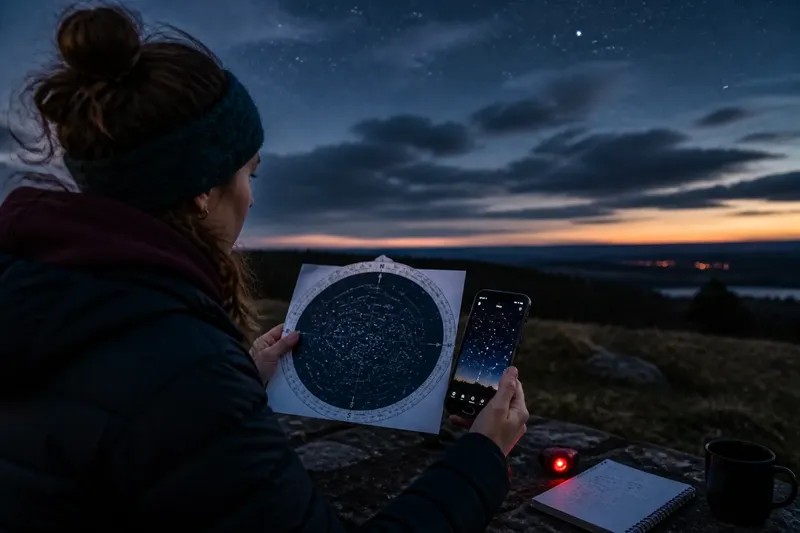
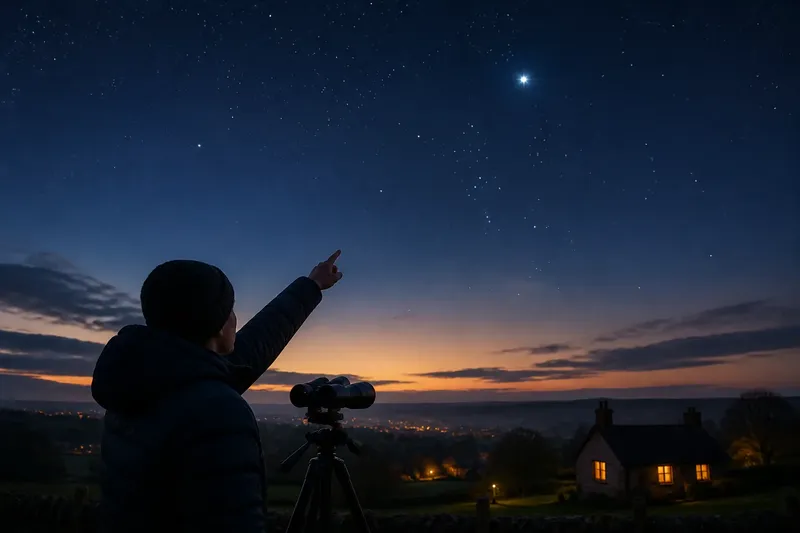
You can apply the same care in your own skywatching. Choose a familiar bright pattern, note its position relative to a fixed landmark, and record whether you see it near dusk or before dawn. Keep the notes descriptive: direction, visibility, and obstructions. One evening cannot establish a seasonal rule; the useful observation comes from comparing the pattern’s timing over the year.
If you compare notes with someone in another place, record each location and viewing conditions. The same object may appear at a different height or convenient hour, and those differences are part of the observation rather than errors.
Before printed star atlases, recurring sky appearances could serve as references for seasonal awareness, but the evidence for any particular practice should be read in its stated context. When you encounter seasonal sky markers, identify the visible cue, preserve the source’s local setting, and leave unsupported details open. That gives you a clearer account without turning varied traditions into a single legend.